For Vets

‘New’ feeding and dietary advice

Become a member
As a member, you can get tons more helpful resources just like this on our Rabbiting On magazine.
See memberships
We have seen some new dietary advice being promoted recently, and we have been asked about its validity. We want to start by saying that we regularly review all new evidence, and we would absolutely change our advice if there were evidence to suggest it. Our advice remains:
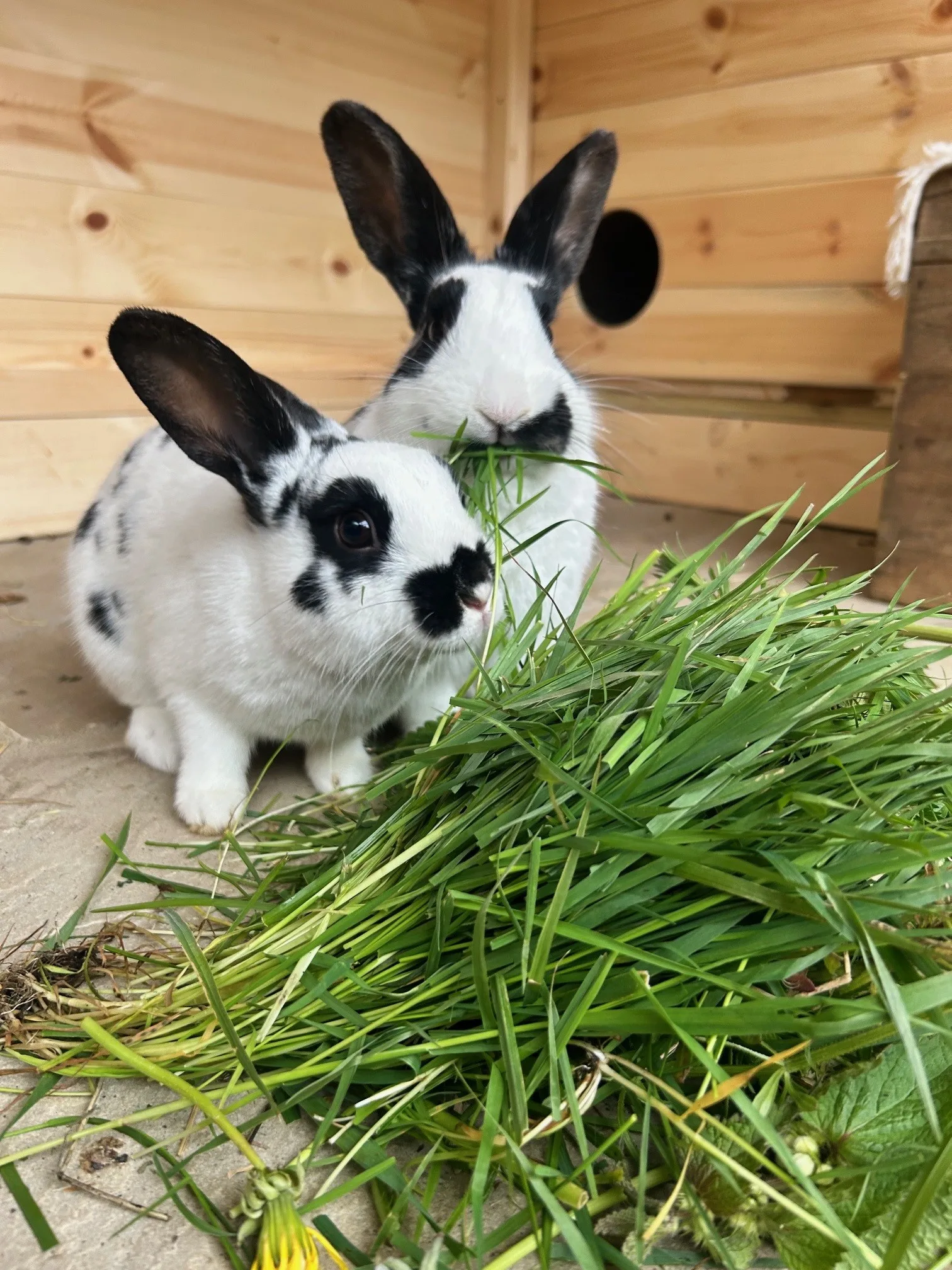
- 85% feeding hay or grass – unlimited access to green, dust-free feeding hay and ideally also access to graze on fresh grass, or picked forage
- 10% greens from the safe list
- 5% pellets/nuggets – this is 15g per kg of rabbit, and this should be weighed out properly and not guessed.
There is no new evidence on rabbit diets, from anywhere in the world, that suggests this advice should change.
Having said that guidelines will not always fit every rabbit, and care givers sometimes will deviate at times to accommodate their own rabbits’ situation.
We have replied to enquiries individually, but we thought it would be interesting to share our thoughts more widely:
1 – Feed only dry food, no grass, to reduce water content and reduce excess ceacatrophs and gas
Whilst there is some sense to this, in that the freshest newest spring grass is well known to cause “scours” in farm animals, so it could possibly be an issue after a winter indoors, or without access to fresh grass, people suddenly give their rabbit fresh grass or put them out in a run etc. However our advice would be to introduce it gradually rather than avoid it, because there are many benefits to feeding fresh grass. The advice to “avoid any fruit and veg” also makes some sense, definitely the fruit, and even for veg, the sort of veg often meant when someone says “fruit and veg” together, is usually, eg carrots, sweetcorn, which isn’t recommended. Our advice would be to feed tiny amounts of fruit as a treat, and that veg from the safe list should make up 10% of the diet.
We can also agree that hay should be the bulk of the diet. We can’t agree that water should be reduced in the diet. Fresh, wet grass contains a lot of water, yes, but this is important as a source of water; rabbits get most of their water from their food, and a decent water intake is important for kidney and bladder health, etc., especially important in rabbits with bladder sludge.
Excess ceacatrophs are not caused by water, but can be caused by too much protein (pellets, for example) in the diet, but also health reasons, such as dental pain, preventing the rabbit from removing them from their bottom. Our advice would be to work with a rabbit-savvy professional in establishing the reasons why. We would advise properly weighing and measuring the pellets, switching to a lifestyle stage with lower protein, or reducing them if needed.
2 – Feed only fresh food, not hay or pellets
It is worth noting that this advice is often coming from companies that sell boxes of fresh rabbit food or are being paid to promote them. This dietary advice is not based on any research.
We do not agree that hay should never be the main food for rabbits. Rabbits SHOULD eat a lot of grass, forage and good quality hay. It’s good for them, and eating it shows that their teeth are relatively healthy. They shouldn’t be forced, no, but they should be encouraged, or at least not discouraged or sated with more tasty but less positively nutritious items such as fresh greens.
One criticism levelled at hay is that the coarse, thick stems are too wide to neatly fit between the grooves forming the grinding surfaces of rabbits’ teeth, and so they non-selectively wear down the rabbits’ teeth, rather than allowing the teeth to wear naturally, self-sharpening at the same time. Whilst we understand the theory behind this, and it is possible, there is presently no research to back this up. However, if this is a concern, then we suggest feeding the finest hay available, choosing later cuts where possible, and avoiding thick woody stems in favour of the more delicate, fine, soft leaves.
Grass and forage would always be preferable, but as that is not always available, it can be substituted for a good quality hay. This should make up 85% of their diet. Advice that hay will make them sick in the long term is highly inaccurate and dangerous. We would certainly suggest fresh grass, still growing, as the ideal main food, along with fresh forage. Any preserved food always lacks the exact composition of the fresh original. However, grass only grows when the soil temperature is over 6 degrees C, so hay provides pretty much everything grass does except water and water-soluble vitamins (which aren’t required much by rabbits in any case), and is a better source of fibre and other nutrients than fresh non-grassy plants.
Neither do we agree that pellets are dangerous if fed in strict moderation. Muesli is known to cause health issues, but pellets are not. They are useful as a feed balancer to make sure that rabbits get everything they need in their diet.
Suggesting that hay can be avoided and that the diet should be based solely on greens is not correct. In brief, achieving the level of indigestible fibre in the diet of rabbits is difficult to impossible if you preferentially feed fresh greens, which are dietary items mainly aimed at humans, who cannot digest cellulose. They have a place, and I’d agree that leafy, fibrous cabbages are a really good example, useful as part of their diet. They shouldn’t be a total replacement for hay, but one more ingredient in a balanced and varied diet. Where they do come in useful is in rabbits who have already got dental disease too severe to allow them to properly eat hay, as a next best thing. Greens are on the whole lower in fibre, higher in protein and sugar and nitrates, for example.
We are concerned that UK rabbit caregivers are being given incorrect and harmful nutritional advice.
In summary, please stick to the 85/10/5 feeding advice, which is widely accepted, and discuss any concerns about your rabbit’s health and diet with your rabbit-savvy vet.
- 85% grass, forage or good quality hay, which should be fed ad libitum
- 10% greens
- 5% pellets (15g per kg of rabbit)
Join our newsletter
Get regular rabbit news, welfare updates, care tips, and stories from the community delivered straight to your inbox.
Related articles

The Importance of Water
In short, water is vital. Rabbits must have access to plenty of fresh water at all times. Rabbits eating lots...
Is Your Rabbit Too Fat?
Wild rabbits have to forage for food, breed, flee to their burrow whenever danger looms and keep warm in inclement...

Obesity, Commercial Food and Treats
Does my bun look big in this? Obesity is a huge problem in pet rabbits. Two of the main causes...